Applications, analytics, and business operations all depend on database performance.
Most cloud environments are not built for data-intensive workloads.
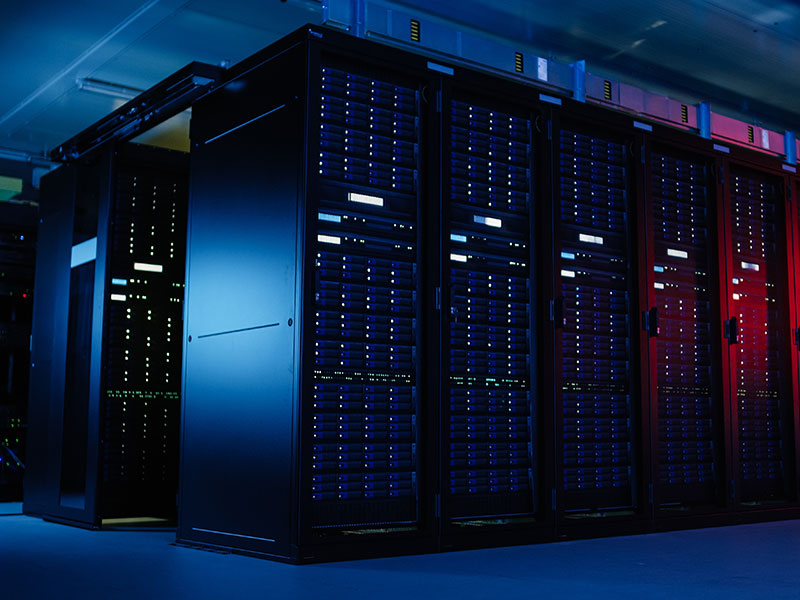
RackBank delivers database environments on high-performance, dedicated infrastructure, optimised for memory-intensive operations, high transaction volumes, and real-time data processing.
Instead of running databases on generalised cloud instances, workloads are deployed on bare metal and high-memory compute systems with NVMe-backed storage, ensuring consistent performance across queries, transactions, and analytics.
Whether handling transactional systems, in-memory caches, analytical warehouses, or vector databases for AI retrieval, the infrastructure guarantees low latency, high throughput, and predictable performance under load.
RackBank supports every major open-source and commercial database engine on
dedicated infrastructure, with reference architectures tuned to each workload profile.
Databases hold the most sensitive data an organisation owns: financial records, customer PII, transactional history, and application state. Security is built into every layer of the RackBank stack.
Find answers to common questions about Database Servers
A database server is dedicated hardware that runs a database management system (DBMS) such as PostgreSQL, MySQL, MongoDB, Oracle, or Microsoft SQL Server. It stores structured or unstructured data and serves queries, transactions, and analytics workloads to connected applications.
A database server is used to store, retrieve, update, and manage data for applications, websites, analytics platforms, and enterprise software. It powers transactional systems (OLTP), analytical workloads (OLAP), in-memory caches, search indexes, and modern vector databases used for AI retrieval.
The best server for database hosting is a dedicated bare metal machine with high-frequency multi-core CPUs (Intel Xeon Gold or AMD EPYC), 64 GB or more of ECC RAM, NVMe storage on RAID 10 for high IOPS, and a low-latency network. Memory-heavy engines like SAP HANA or Redis clusters need 512 GB to 2 TB of RAM.
SQL databases (PostgreSQL, MySQL, Oracle, SQL Server) use structured schemas and are optimised for transactional consistency and complex joins. NoSQL databases (MongoDB, Cassandra, Redis) use flexible schemas and are optimised for horizontal scale, high write throughput, or specific data models such as key-value, document, or wide-column.
Yes. RackBank runs PostgreSQL on dedicated bare metal with NVMe storage, replication, backup, and monitoring. Configurations support single-node, primary-replica, and high-availability cluster deployments.
Yes. RackBank supports MongoDB in standalone, replica set, and sharded cluster architectures on dedicated infrastructure.
Yes. RackBank offers SAP HANA-ready configurations with high-memory nodes (up to 2 TB RAM), NVMe storage, and dedicated network fabric.
Yes. RackBank supports vector database workloads for AI and retrieval-augmented generation (RAG), with GPU add-ons available when embedding generation happens on the same node.
99.98% uptime SLA on higher-tier configurations with 24x7 monitoring, redundant power, and hardware replacement guarantee. Entry configurations carry a 99.98% SLA.
RackBank operates datacenters across India, including Indore, Mumbai, and Raipur, with Vizag coming soon. All database workloads run on India-resident infrastructure and are DPDP-aligned.
Yes. RackBank provides migration assistance from public cloud providers or on-premises infrastructure to dedicated database servers, planned to minimise downtime and preserve data integrity.
RackBank offers integrated snapshot, incremental backup, and disaster recovery services with daily and weekly schedules, encrypted storage, and optional geo-redundant replication across RackBank regions.
On-premises deployments give complete control but require upfront investment in hardware, cooling, power, and specialist staff. Hosted dedicated database servers on RackBank remove that operational overhead while retaining single-tenant performance, full root access, data residency, and predictable cost.
Discover how RackBank can accelerate your AI and data journey.